
You are wasting your time on features nobody asked for.
Most founders sit in their IDEs, convinced that the next iteration of their dashboard will fix their dead growth metrics. It will not.
When I was at the Google Antigravity Startup Sprint, the pattern was obvious. The apps that scale are not the ones with the cleanest codebases. They are the ones with ruthless business mechanics.
The data says the same thing. CB Insights studied 431 VC-backed startups that shut down since 2023. Running out of capital showed up in 70% of them, but that is only how the story ends. The root causes underneath were poor product-market fit (43%), bad timing (29%) and broken unit economics (19%). Not bad code.
If your startup is stalling, it is not a technology problem. You are leaking users, traction and revenue because you are avoiding the uncomfortable work of building a real business.
Here is the framework to stop the bleeding and actually scale.
1. The Distribution Delusion
If you have great technology but zero users, stop building features today. Founders default to code because it is safe. Marketing is unpredictable, so you avoid it.
Your problem is not that your product lacks a dark mode. Your problem is that no one knows you exist.
Do this today: Turn your founder journey into organic content. Post what you're building, what broke and what you learned. Early adopters buy into the visionary before they buy into the software.
2. The Onboarding Reality Check
You treat your app like a masterpiece that deserves a guided tour. Your users treat it like a tool they will abandon the second it fails to solve their problem.
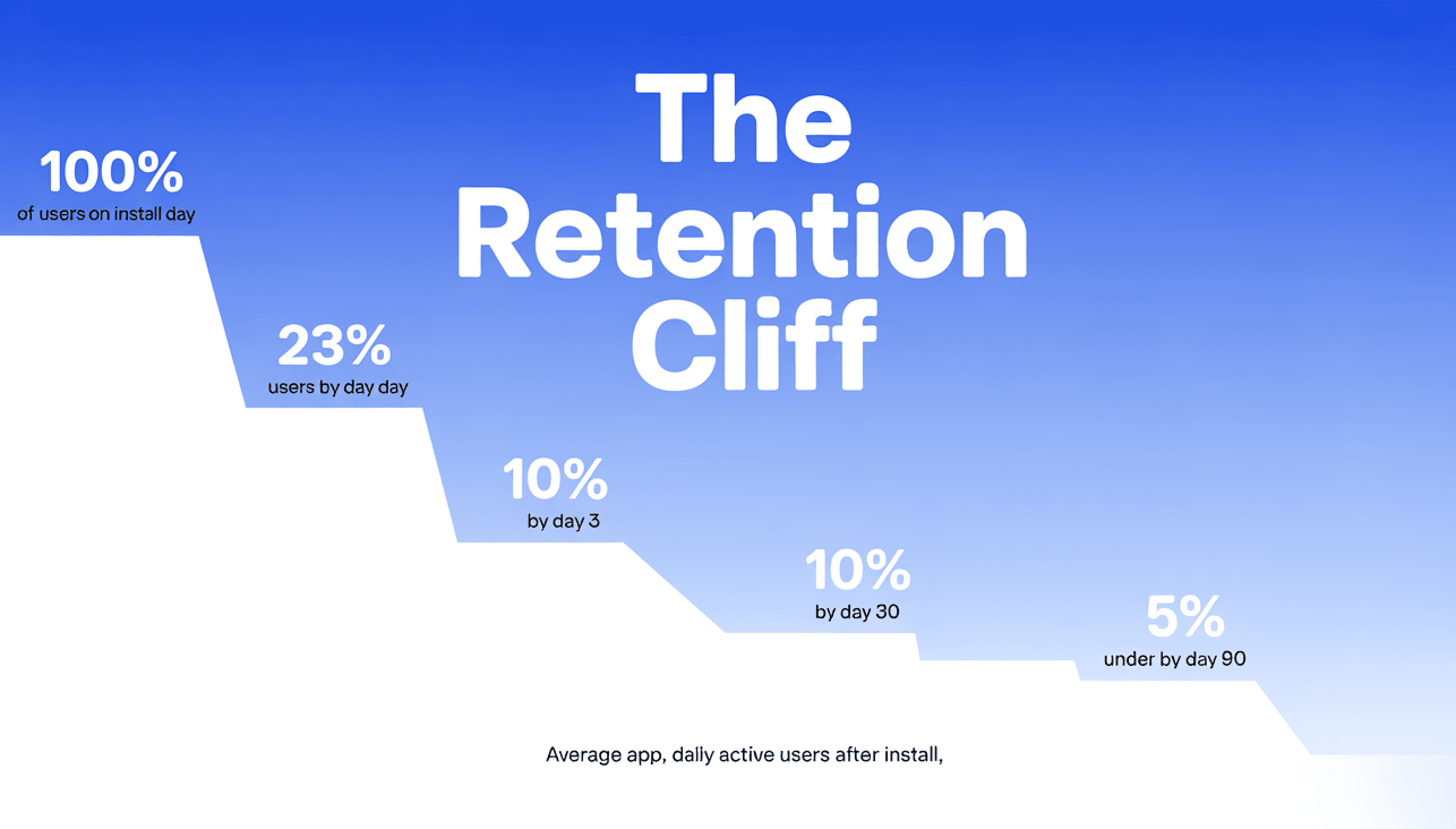
The numbers are brutal. Andrew Chen's analysis of Quettra data found the average app loses 77% of its daily active users within three days of install, and over 95% within 90 days. Users decide in the first few sessions whether you are worth keeping.
Do this today: Map your onboarding flow screen by screen and cut three clicks. If a new user can't reach the "aha" moment in about 20 seconds, drop them straight into the core value.
3. The Churn Confrontation
If your MRR is bleeding, guessing why in a Slack channel is a waste of time. Keeping a customer is far cheaper than finding a new one: HBR puts acquisition at 5 to 25 times the cost of retention, depending on the industry.
Do this today: Find the ten highest-LTV users who canceled in the last 30 days. Get them on a 15-minute live call. Do not email a survey. Ask for brutal honesty. What they tell you is your real roadmap.
4. The Fake Moat
If a competent developer can clone your SaaS over a weekend, you do not have a business. You have a UI wrapper.
Stop competing on pretty interfaces. Your moat is your proprietary data, your unique integrations and how deeply your software is woven into your user's daily workflow.
Ask yourself: If a customer could migrate away in an hour, what have you actually built?
5. Pricing Cowardice
If nobody is complaining about your price, you are leaving money on the table. Competing on price is a race to the bottom you will lose to someone with deeper pockets.
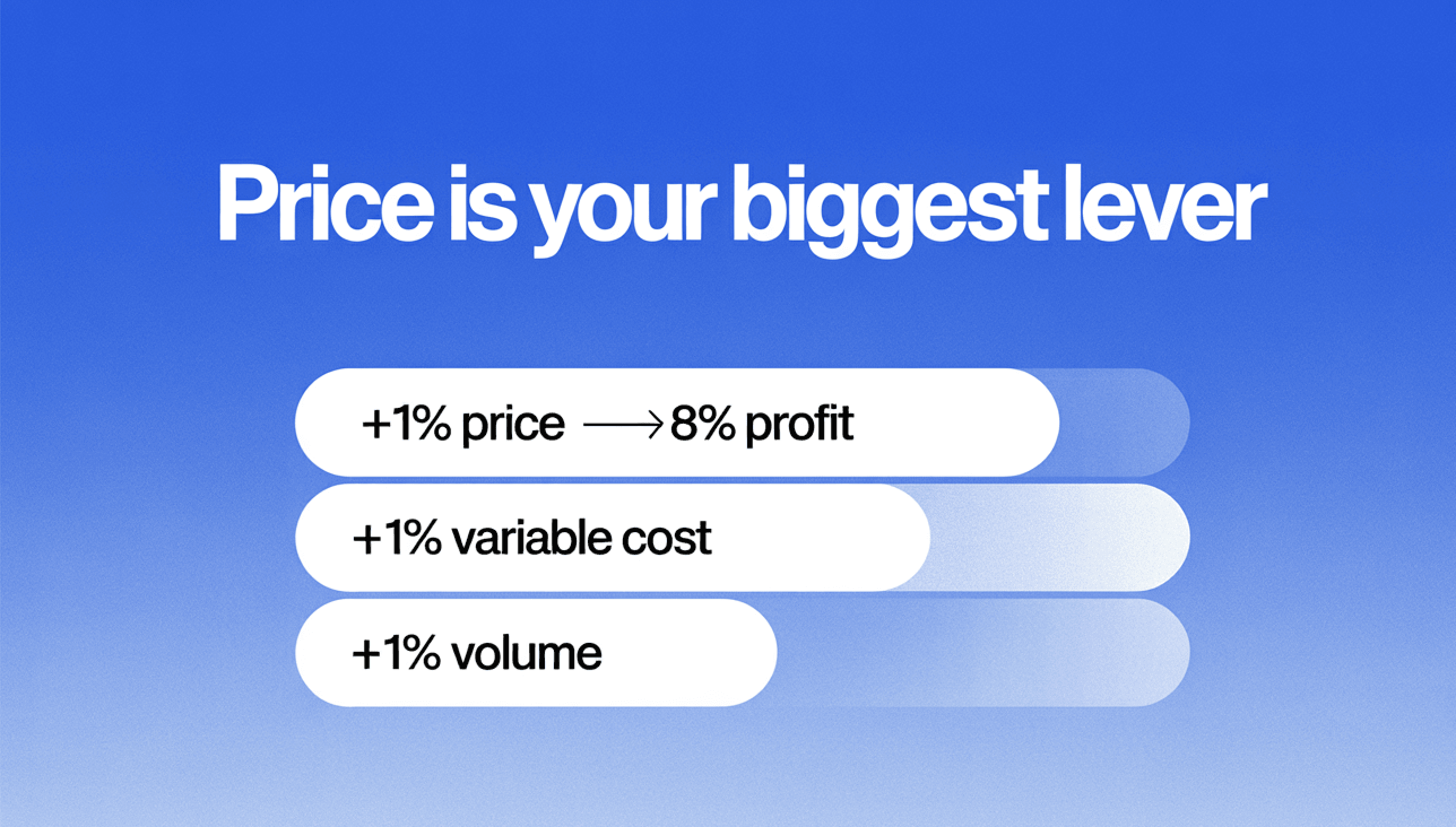
Price is also the strongest lever you have. McKinsey found that for a typical large company, a 1% price increase with stable volume lifts operating profit by about 8%. That is more than three times the impact of a 1% increase in volume.
Do this today: Double your price for the next ten users you onboard. Price filters out the noise and brings in customers who value the outcome.
6. The Pre-Revenue Reality Check
If you have an endless feature backlog and zero revenue, your MVP scope is broken. Poor product-market fit was the single biggest root cause in that CB Insights study, cited in 43% of shutdowns.
Stop building massive, generic platforms. Find one high-leverage pain point and charge for the solution before the infrastructure is polished.
The test: If you cannot convince a single person to pay for the outcome you promise, more code will not save you.
7. The Perfectionism Trap
If your velocity has stalled, you are over-engineering. You are a startup, not a legacy bank.
Do this today: Shrink your scope and force yourself into 48-hour micro-deployments. Ship the minimum needed to test one market assumption. If it breaks, fix it live. Speed of execution is your only true advantage.
8. The Free-Tier Fallacy
Stop taking feature requests from people who don't pay you. Free users want everything and pay for nothing.
The math backs this up. In Lenny Rachitsky and Kyle Poyar's benchmark of 1,000+ products, a good free-to-paid conversion rate for self-serve freemium is just 3–5%. Even in a healthy product, roughly 95 of every 100 free users will never pay.
The rule: Your roadmap is set by the users who pull out their credit cards. No transaction attached to the feedback, no vote.
9. The Missing Growth Loop
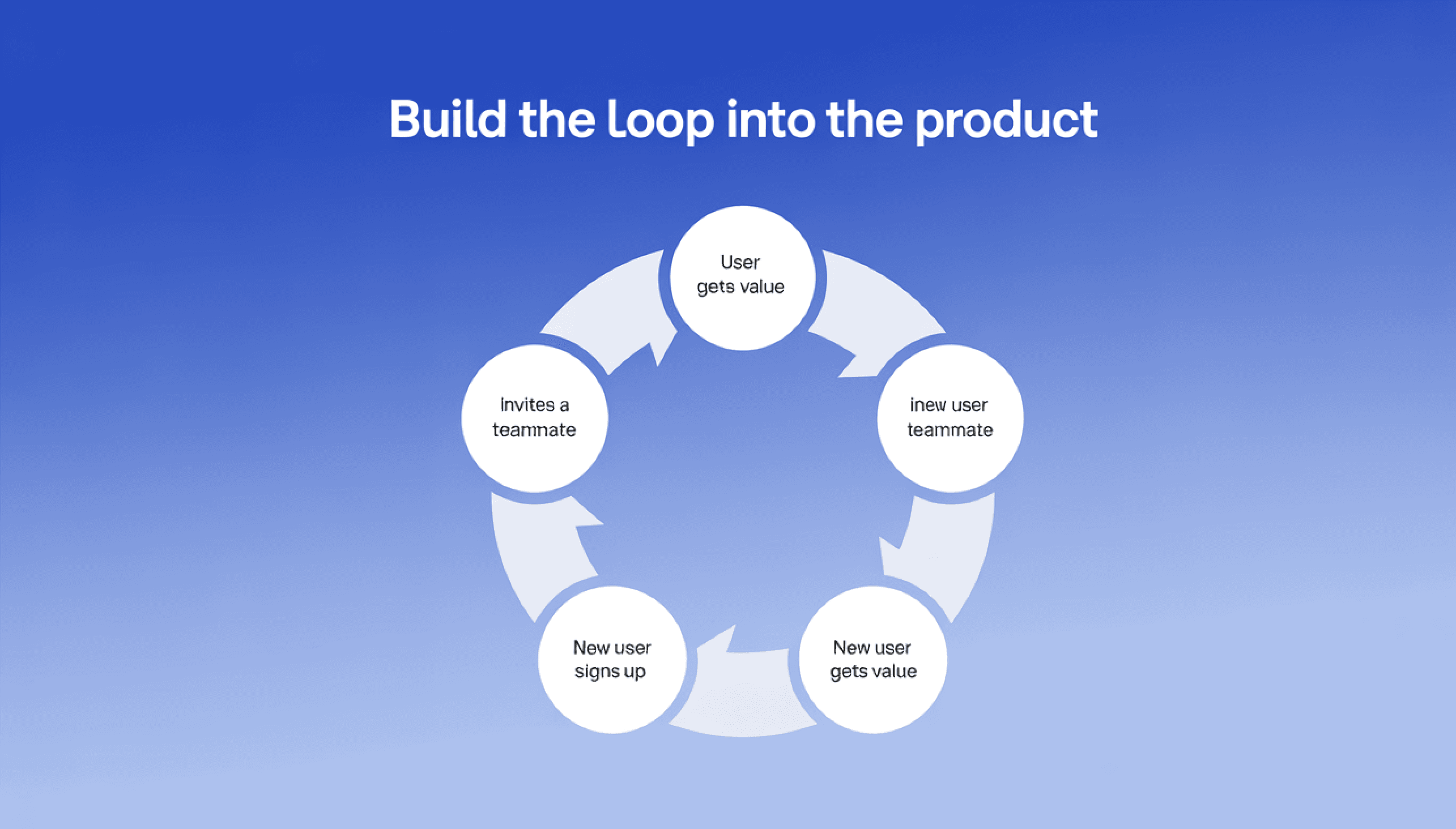
If you are burning out marketing your app by hand every single day, your product is a dead end. Distribution has to be engineered into the product itself.
Dropbox is the textbook case. Founder Drew Houston reported that its built-in, two-sided referral program permanently lifted signups by 60%.
Do this today: Find the moment in your product where a user naturally needs someone else: sharing a file, inviting a teammate, sending a result. Make that the invite.
The 60-second audit
Run your startup through these nine questions. Every "no" is a leak.
- Do people outside your circle know you exist?
- Can a new user hit the core value in about 20 seconds?
- Have you spoken live to a churned customer this month?
- Would switching away from you cost a customer more than an hour?
- Has anyone complained about your price lately?
- Has at least one person paid for the outcome you promise?
- Did you ship something to real users in the last 48 hours?
- Is your roadmap driven only by paying users?
- Does using your product naturally bring in new users?
Stop guessing. Run the system.
Building an app is just the entry fee. Scaling it means stepping away from the keyboard and running the business.
Fix the mechanics first. The code can wait.
If this helped, save it for the next time you catch yourself opening your IDE to avoid a hard conversation. Tell me in the comments which of the nine is leaking in your startup right now. I read every one.
— Ayoub · u/iayvob